
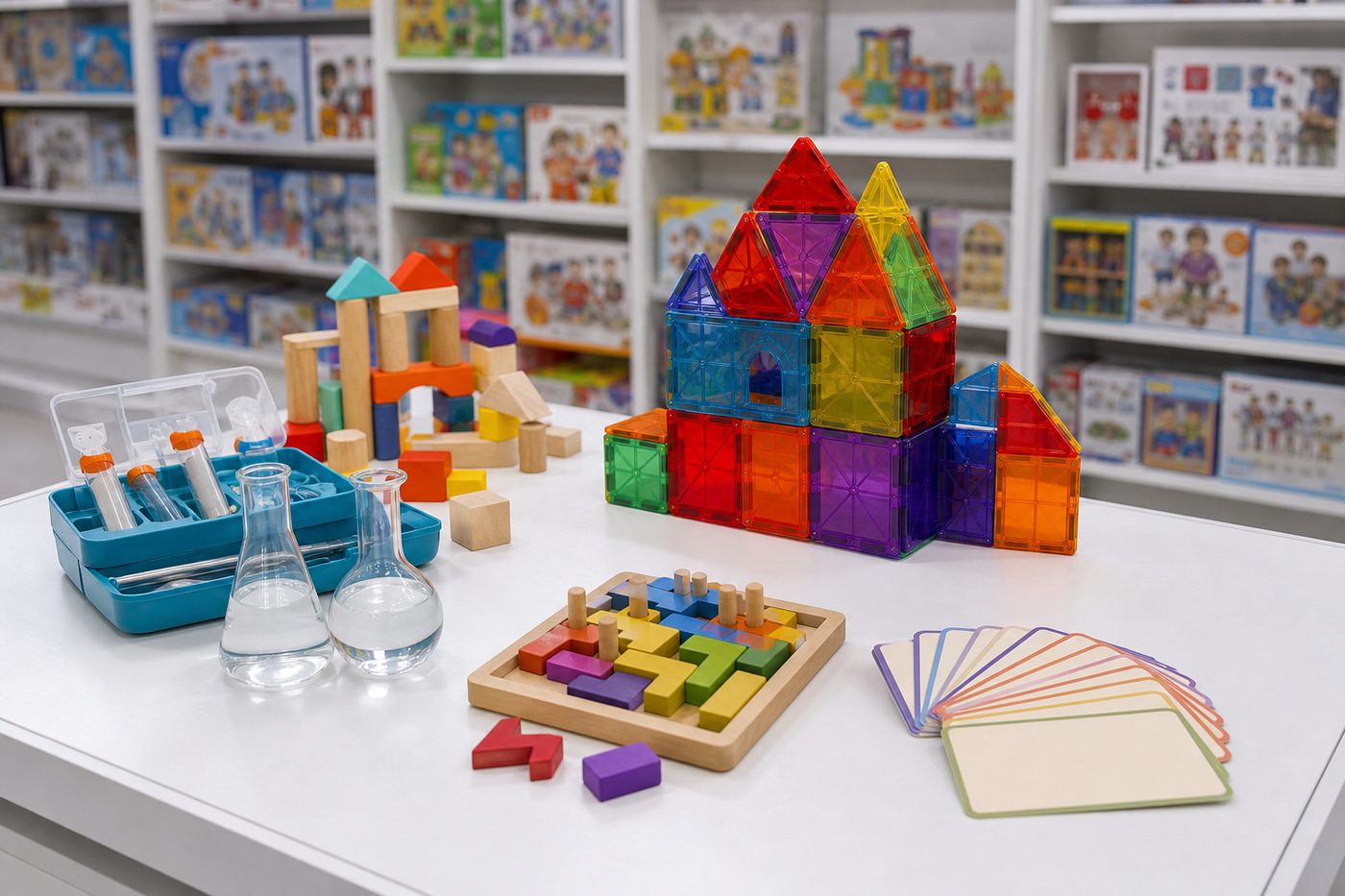
A wholesale toy page should state five facts inside its first 100 words: the age grade, the materials and any small parts, battery or magnet content, the compliance standard claimed, and who the legal manufacturer or distributor is. Read those five and you already know whether to contact the supplier — or whether you are about to spend an afternoon chasing a test report that does not exist.
The first 100 words are a screening surface, not marketing copy. Customs officers, marketplace compliance teams and your own QC staff all ask the same questions, and a page that answers them up front signals a supplier who keeps records. A page that opens with 'high quality, competitive price, fast delivery' signals the opposite.
This page covers the documents that get pulled at destination, what a recall history actually teaches a buyer, and how to run the first-100-words check against a supplier questionnaire before you commit to an order.
Which documents do port and customs examiners actually pull?
| Commercial invoice and packing list | Why the officer asks: to match the goods to the entry and to the cartons in front of them. Where it should be: with the broker and a copy with the shipment. If you do not have it: the container sits while identity is re-established. |
|---|---|
| Age grading statement | Why the officer asks: age grade drives which small-parts, small-ball and battery rules apply. Where it should be: on the page, on the packaging, and in the technical file. If you do not have it: the shipment is assessed against the strictest plausible reading. |
| Conformity or test documentation | Why the officer asks: to see a standard cited and a lab named, not a logo. Where it should be: available on request, scoped to the exact SKU and material. If you do not have it: 'varies by spec' becomes the practical answer, and the exam gets longer. |
| Battery and magnet declaration | Why the officer asks: button cells and high-powered magnets are recurring recall triggers. Where it should be: in the product description and the technical file. If you do not have it: the shipment is treated as if the component is accessible. |
| Manufacturer or importer of record | Why the officer asks: someone has to be accountable after the container clears. Where it should be: named in the first 100 words, with an address, not a brand alias. If you do not have it: marketplace and customs follow-up lands on you by default. |
| Origin evidence | Why the officer asks: duty treatment turns on origin rules and manufacturing facts. Where it should be: with the broker, supported by production records. If you do not have it: the seller's warehouse location proves nothing about origin. |
What historical recalls teach a buyer to ask
Historical recall records are a free checklist of the failure modes that actually reach the shelf. The cases below come from official US Consumer Product Safety Commission (CPSC) recall pages — older cases rather than current news — and none of them is connected to any specific supplier, customer or SKU. Read them as question prompts, not as findings about a page you are looking at.
A wooden bead stacking toy was recalled because it was intended for children under three and the beads violated the small parts ban — a deadly choking hazard. That is the age-grading question in one line: what age is this toy actually for, and does the page say so before it says anything about price?
Squishy toys with water beads were recalled because the beads expand beyond the permitted size, posing ingestion and intestinal obstruction hazards. Magnetic board games and magnetic stick figure sets were both recalled over loose high-powered magnets that can be liberated and swallowed. LED finger lights were recalled because button cell batteries were easily accessible to children. An older case involved remote-controlled race cars whose circuits could fail, overheat and emit smoke. A spiral toy violated the small ball ban for under-threes, and a popping toy was recalled because a clear plastic dome could detach and expose the small balls inside.
Those eight cases collapse into six questions you can ask any supplier today: what is the age grade and how is it stated; can any component detach and become accessible to a child under three; are magnets encapsulated and retained; how is the battery compartment secured; do expandable materials meet the applicable limit; and what thermal or failure testing backs the electronics. A supplier who can answer all six in writing is a different risk category from one who answers with a brochure.
Worked example (illustrative, not a real shipment)
A buyer orders roughly 4,000 wooden educational puzzle units, split across two destinations — one US e-commerce warehouse and one EU retail DC — with different retail packaging for each. The page looked fine: clean photos, 'eco-friendly wood', a confident tone.
The first 100 words never stated the age grade, never named the standard, and never identified the manufacturer. The supplier's quote sheet mentioned ASTM F963 in a footer, with no lab named and no report attached.
At the destination end, the US entry gets flagged for a compliance review because the age grade is unstated and the packaging shows small removable pieces. The EU leg is held separately because the carton artwork carries a CE mark with no technical file behind it. Neither problem is fatal; both are expensive, because the fix happens after the container has moved.
The step that would have caught it: extracting the five facts from the page before sending the first RFQ, then asking for the missing three in writing. One email, sent early, replaces two weeks of broker emails sent late.
| Step 1 — Read the first 100 words | Check for age grade, materials and small parts, battery or magnet content, compliance standard, and manufacturer identity. Red flag: price and shipping promises before any of the five. |
|---|---|
| Step 2 — Extract the stated facts | Write down exactly what the page claims, in the supplier's own words. Red flag: a standard named with no lab, no report number and no scope. |
| Step 3 — Compare against your question set | Run the six recall-derived questions. Red flag: 'all our products are certified' as the only answer. |
| Step 4 — Identify what is missing | List the gaps in writing before contact. Red flag: gaps you fill in yourself from assumption. |
| Step 5 — Ask the supplier | Send the gap list as a short written RFQ. Red flag: verbal answers only, no document follow-up. |
| Step 6 — Decide contact or procure | Contact if the gaps are answerable; walk if the five core facts stay missing after one round. Red flag: pressure to pay a deposit before documents arrive. |
What to ask suppliers
Send these as a written list. A supplier who answers in writing and attaches documents is a supplier you can build a specification with; one who answers by phone and follows up with a catalogue is not.
Two operational facts sit behind these questions. Lead time should be broken into tooling, first sample, testing, production, packaging and shipping, because one total number hides which stage is actually the bottleneck. And after any change that can affect safety or compliance — material, component, factory, artwork — the retest decision should be documented even if the product name and SKU stay the same.
Color is the third one buyers forget. Check color across cavities, shifts and material lots, because one approved first piece does not prove full-run consistency — and a color change can sit next to a material change without anyone flagging it. Finally, customs origin depends on the applicable origin rules and manufacturing facts; a seller's or warehouse's location alone does not prove origin, so ask for the production record, not the address.
| What age grade is this toy intended for, and where is that stated? | The age grade determines which small-parts, small-ball and battery rules apply, so it should appear on the page, the packaging and in the technical file. |
|---|---|
| Does any component detach and become accessible to a child under three? | Ask specifically about small parts accessible after use, not only as shipped — the wooden bead and popping-toy cases both turned on components becoming reachable. |
| Are magnets encapsulated and retained, and what standard applies? | Loose high-powered magnets are a documented ingestion hazard, so the answer should describe the retention method, not just the presence of magnets. |
| Does the toy contain button or coin cells, and how is the compartment secured? | Accessible button cells are a recurring recall trigger; ask for the compartment design and any tool-required opening. |
| Do any materials expand beyond the permitted limit when ingested? | Water beads and similar expandable materials have their own limits; ask for the expansion figure and the test that supports it. |
| Which standard do you cite, and can you send the report for this exact SKU? | A standard named without a lab, report and scope is a claim, not evidence — request the document scoped to the SKU and material. |
| Who is the manufacturer or importer of record, with an address? | Accountability after clearance needs a legal entity, not a brand alias; ask before the deposit, not after. |
| For electronics, what thermal or failure testing has been done? | Circuit failure and overheating have caused recalls before; the answer should reference testing, not assurances. |
| What is your process if a component is found to detach in use? | A supplier with a documented change and retest process behaves differently from one improvising after a complaint. |
| How do you document a retest after a material or component change? | The retest decision should be recorded even when the product name and SKU stay the same. |
FAQ
Should a wholesale toy page state its compliance standard in the first 100 words?
Yes. Naming the standard is the fastest signal that the supplier knows which regime applies and has documents to match. A standard cited without a lab, report scope or SKU reference is a claim rather than evidence — the paper at the exam is the report, not the logo.
Why does a missing age grade cause a hold at the port?
Age grade drives which small-parts, small-ball and battery rules apply, so an unstated age grade forces the examiner to assess the toy against the strictest plausible reading. Stating it early, on the page and the packaging, removes that ambiguity.
Do past recalls mean a supplier is unsafe to work with?
No. Historical recall records are published failure modes, not verdicts on any specific supplier, and none of the cases cited here is connected to a named seller. Use them as question prompts: component detachment, magnet retention, battery access, expandable materials, thermal behavior.
What should the first 100 words say about batteries and magnets?
State whether they are present, how they are secured or retained, and which standard applies. Accessible button cells and loose high-powered magnets are recurring recall triggers, so a vague answer here is a reason to slow down.
Is a supplier's warehouse address enough to establish customs origin?
No. Customs origin depends on the applicable origin rules and the manufacturing facts, and the location of a seller or warehouse alone does not prove origin. Ask for production records instead of an address.
When should I stop reading a wholesale toy page?
If the five core facts — age grade, materials and small parts, battery or magnet content, compliance standard, and manufacturer identity — are still missing after one written follow-up, treat it as a walk-away. Contact if the gaps are answerable; procure only when the documents arrive.
Sources
Related Products & Categories
Check the page before you check the price
Run the five-fact check on any wholesale toy page, including ones you are already negotiating with. If the age grade, materials, battery or magnet content, compliance standard and manufacturer identity are all stated in the opening lines, you have a supplier worth a written RFQ. If they are not, that is your first question — and sometimes your last.
For a worked comparison, look at how an educational wooden puzzle page handles age grading and material disclosure alongside the product specification: Montessori Kids Educational Wooden CVC Word Game Writing Spelling Flash Cards Homeschool Supplies Puzzle Toys for Playing.