
Actionable QC photos and inspection reports are ones you can act on without calling the factory: captioned images tied to checklist items, defects classified by severity with quantities and locations, sampling data, measurements against your spec, and a clear pass, fail, or pending verdict. If a photo set has none of those, it is decoration, not evidence — and it should not be the reason you release a shipment.
This page is written for the day you actually stand in a factory: what to look at on the way in, what to open on the sample table, and which records you must walk out with. It also covers why an inspection report is an input to conformity assessment, not proof of it — the EU Toy Safety Directive, CPSIA/ASTM F963, a Children's Product Certificate, and GPSR all sit on top of your QC file, not inside it. Use the door, sample, and exit checks below on any factory, in any city.
At the door: which document do you read first, and what makes you stop?
Read the document that ties a specific product to a specific test scope first — not the certificate wall. Ask for a test report or conformity document where the product name, model or configuration, age grade, target market, and standard edition are all readable on the same page. If those fields are missing, or the report describes a different configuration than the sample in front of you, do not continue the visit as a normal audit; move it to a document-collection visit and leave the approval decision open.
The reason is structural. A test report is supposed to identify the product configuration, age grade and standard edition, and the applicable edition has to be read from the current regulation before a report is quoted. CPSIA Section 106, 15 U.S.C. § 2056b, is what makes ASTM F963 the relevant US toy standard set, and a Children's Product Certificate is product-specific — it is not a blanket factory credential. Treat any factory that waves a "we are certified" folder as untrained in compliance, not as compliant.
Two more date checks belong at the door. First, beginning July 8, 2026, importers of most regulated consumer products will be required to electronically file Children's Product Certificates — so the certificate data has to be clean and machine-readable, not a scanned PDF from three years ago. Second, for EU-bound toys, Directive 2009/48/EC sets the essential safety requirements and GPSR (Regulation (EU) 2023/988, adopted 10 May 2023) runs alongside it as a horizontal product-safety framework covering distance selling and online marketplaces. Neither document is satisfied by photos.
A practical door test: ask the person walking you through to point at the report line that covers the exact material and part you are worried about — the coated shell, the detachable accessory, the printed decal. If they cannot find the line, that is your answer about how the QC file was built.
Settle one more thing before you go past reception: Incoterms define when risk transfers between seller and buyer, but they say nothing about who owns the test reports or who is the responsible party on the declaration. That is a room conversation, because it is far harder to settle after the container sails.
On the sample: what do you open, and what do you ask right after?
Open the unit that production would actually ship, then compare it against a sealed golden sample that carries the approved material, color, decoration, dimensions and photos. A sealed golden sample is a practical production-QC reference — it does not replace required market testing, but it is the fastest way to turn a subjective argument into a yes-or-no one. If there is no sealed reference, you are auditing a memory.
Then run the sample the way your QC report should have run it. Work through the physical checks first: overall shape and silhouette, logo placement and font weight, stitching and seam density, hardware and closures, material and texture, colorway accuracy, and dimensions measured against your specification with flat measurements rather than the size label. On toys specifically, the detachable parts get the same discipline as the main body — age grading and small-part risk are connected and must be assessed for the actual product configuration, and assemblies, detachable accessories and packaging components need the same review discipline.
The question to ask immediately after: "Show me the photos of this from the last pre-shipment inspection, and tell me the defect quantity in the sample." A pass or fail verdict without photo evidence, severity classification, and how many units were affected is not negotiable material. Defects should be classified as critical, major, or minor, each with a description, a photo, the location on the product, and the quantity affected in the sample. Critical defects — sharp edges, exposed wiring, a missing clasp on a child's product, a material that fails safety testing — normally fail the inspection outright.
Sampling method is the next question, and it is the one most buyers forget. Ask which sampling plan was used and whether results are reported per defect category with sample size and accept/reject numbers. A recognized approach is statistical sampling based on ISO 2859-1 (ANSI/ASQ Z1.4), reported with the actual defect counts. If the answer is "we checked a few boxes," you have a photo album, not an inspection.
Measurement data deserves its own line in the conversation. Ask for actual measurements shown side by side against your specification, with tolerance deviations flagged so you know how far off a unit is, not just that it failed. That single change — degrees of non-conformance instead of a red X — is what lets you negotiate a rework, a discount, or a remake instead of arguing about taste.
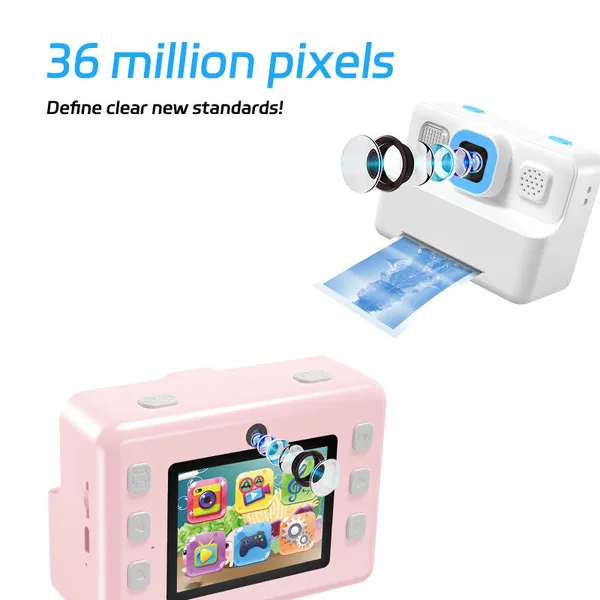
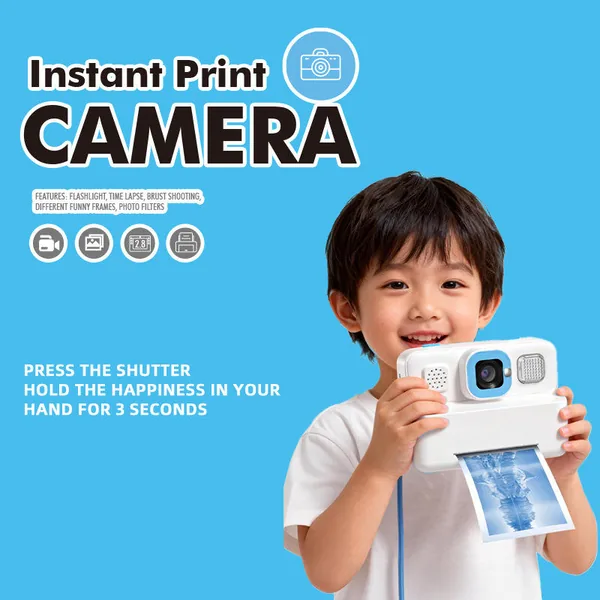
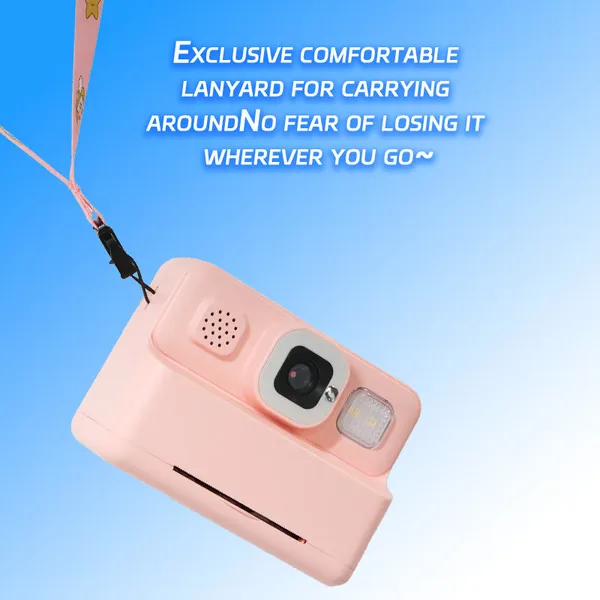
Products with a battery, a lens, or a print mechanism need a longer sample check, and the QC file has to match. Take a plastic item such as the Kids Camera Instant Print: the inspection checklist for a unit like that has to cover the housing, the lens area, the print output, the packaging, and the battery compartment separately, because a single pass/fail on "the camera" tells you nothing about which of those five failed. Whatever you source, the rule is the same: one checklist line per failure mode, one photo per checklist line.
Before leaving: which records must you take with you?
Leave with five things, or leave with an open question. One: the inspection report as a file, with captioned and categorized photos cross-referenced to specific checklist items, not a folder of untitled JPGs. Two: defect data with severity classification, quantities, and locations. Three: the sampling plan and its results per defect category. Four: measurement-versus-specification data with tolerances. Five: the report's recommendation — pass, fail, or pending conditional on corrective action — with the inspector's notes on factory conditions and production status.
Ask for the underlying records, not just the summary. Inspector notes covering factory conditions, production status, worker compliance, and issues outside the formal checklist are often where the real risk signal lives. And confirm how long the report is stored and whether it is searchable by supplier, product, date, or result — because the value of an inspection file comes from comparing this run against the last three.
Where a field is genuinely unknown, write unknown in your own file. Do not let a blank become an assumption. If the factory cannot state the applicable standard edition, the responsible party on the declaration, or the age grade the product is intended for, that is a finding, and it belongs in the risk review before anyone signs a purchase order.
For packaging, take the artwork and the markings with you. Packaging wording and product markings are controlled fields that can change with the SKU, and tracking information should be permanent and support product identification where applicable. A carton photo that shows the shipping mark, the importer block, and the warning language is worth more than ten glamour shots of the product.
Last item: the corrective-action path. If the recommendation is pending, get the corrective action, the owner, and the re-inspection trigger in writing before you leave the site. A pending verdict with no named owner is a fail that has not been labelled yet.
Treat everything you collected as inputs to an independent evaluation and risk-review process, not as an approval. A clean photo set from one production run is one data point. It is not a certification, it is not a capacity statement, and it is not a guarantee about the next order — and any supplier who tells you otherwise has just told you something useful about how they think.
FAQ
Do QC photos and inspection reports prove my toy complies with EU or US rules?
No. QC photos and inspection reports are quality evidence, not conformity proof. EU toy safety rules sit in Directive 2009/48/EC, and GPSR (Regulation (EU) 2023/988) is a separate horizontal product-safety framework; in the US, toys generally require testing at a CPSC-accepted laboratory and a Children's Product Certificate. Keep the inspection file as an input to that assessment, not a substitute for it.
What is the single most useful defect field in an inspection report?
The quantity affected in the sample, per defect category. A photo of one cracked housing is a story; "8 units of 200 in the sample, major, at the hinge" is a negotiating position. Pair it with severity classification (critical, major, minor) and the location on the product, and the report becomes usable in a supplier conversation.
How many photos should a pre-shipment inspection include?
There is no industry-mandated number, so judge structure rather than volume. What matters is that photos are captioned, categorized, and cross-referenced to checklist items, and that defect close-ups include measurements. A large uncaptioned photo dump is harder to use than a smaller set where each image answers a named checklist line.
Does a Children's Product Certificate cover the whole factory?
No. A CPC is product-specific and identifies the applicable rules and responsible parties based on testing results — it should never be described as a blanket factory certificate. Note also that beginning July 8, 2026, importers of most regulated consumer products will be required to electronically file Children's Product Certificates, so the underlying data has to be accurate and current.
Which sampling method should I ask the factory or third-party inspector to use?
Ask for a stated sampling plan reported per defect category with sample size and accept/reject numbers. A recognized approach is statistical sampling based on ISO 2859-1 (ANSI/ASQ Z1.4). If the report only gives a total defect count with no sampling basis, you cannot compare it against another inspection or another supplier.
What do I do if the report says pending instead of pass or fail?
Get the corrective action, the responsible owner, and the re-inspection trigger in writing before you leave the site or release the shipment. A pending verdict means the evidence is incomplete, so the approval decision stays open until the corrective action is verified — not until someone promises it will be fixed.
Sources
Related Products & Categories
Request a quote or a factory audit
If you want to run the door, sample, and exit checks against a real production line rather than a slide deck, send us the product configuration, target market, and age grade you are working to. We will walk you through the documents we hold for that scope, show you the sample and packaging, and tell you plainly which records we can produce and which ones sit with your importer or a third-party lab. Ask for a quote or schedule a factory audit — and bring your own checklist.