
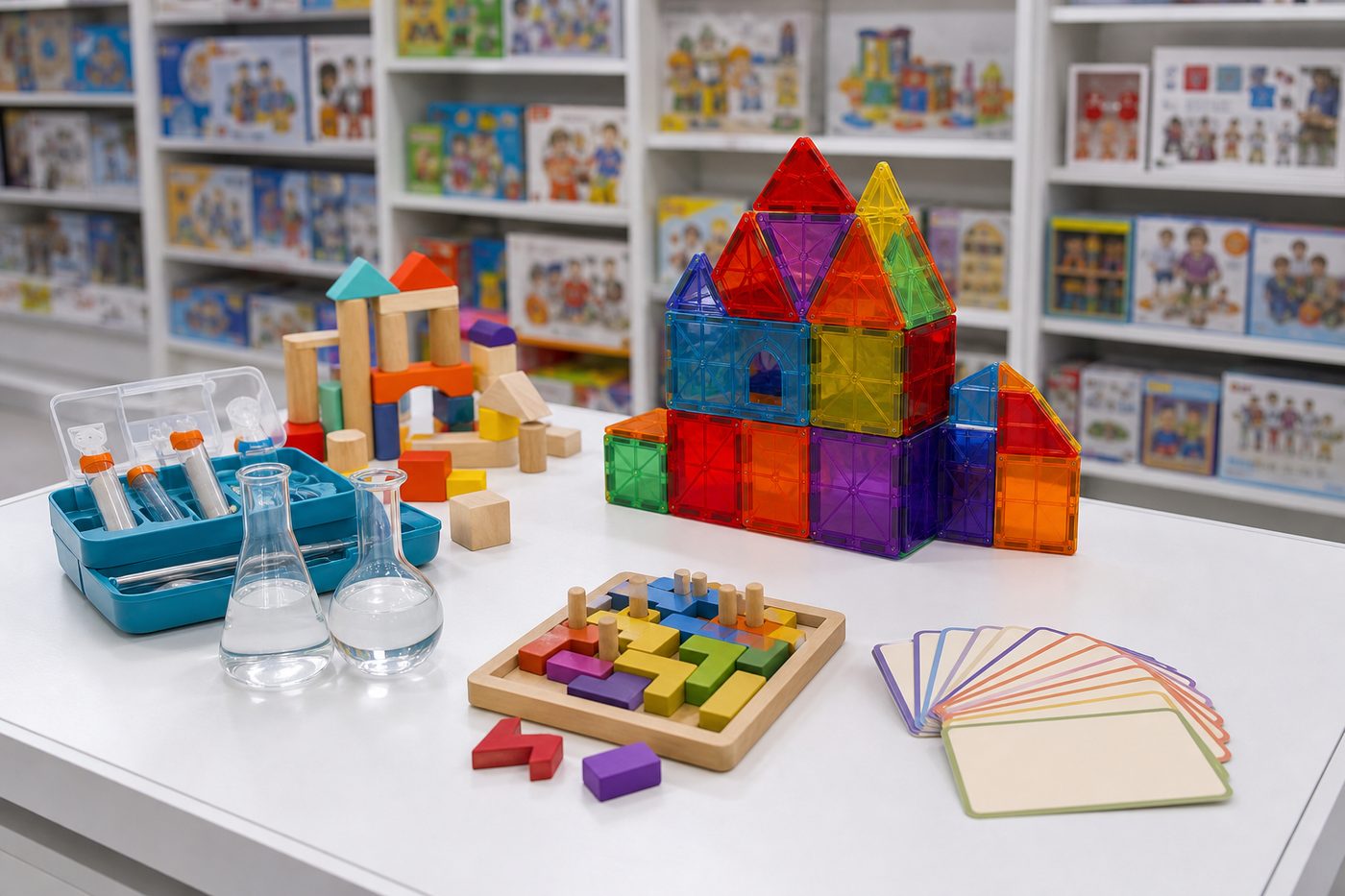
Buyers lose money on this decision in one of two ways: they pay for a private label program and then discover the factory still owns the design, or they commission an OEM build without ever asking who owns the tool at the end. The rule is straightforward. If you already own the artwork, tech pack, or technical files and can defend the volume, go OEM. If you are adapting a factory's existing product with your brand, packaging, and colorway, go private label and spend your budget on branding and compliance instead of steel.
In practice, the two routes are not competitors. Private label is a business model; OEM and ODM are the manufacturing relationships underneath it. A private label program usually runs on a factory's existing platform — already-molded or already-developed goods — while OEM means the product is built to your specification, which is where sampling, tooling, MOQ, and QC become the real cost centers.
Key Takeaways
- Choose OEM only when you control the design files and the annual volume can absorb tooling, multi-round sampling, and per-market testing. Choose private label when speed, lower setup spend, and brand presentation matter more than structural exclusivity.
- The customization depth is the dividing line: OEM changes form, material mix, mechanism, and inserts; private label typically changes logo, colorway, labels, hangtags, sleeves, boxes, and bundles on an existing base.
- Tooling is the single biggest irreversible spend in an OEM program. Before paying any mold deposit, get written answers on who owns the tool, whether it can be transferred, and what happens to it if the relationship ends.
- Sampling is where briefs succeed or fail. Freeze one approved sample in writing — with photos of color, proportion, stitching, and packaging — and make that the reference for the bulk run and any later reorder.
- MOQ is not one number. It is a structure that can differ by SKU, color, material, packaging format, and whether a new tool or a print plate is involved. Ask for the full MOQ structure before you build a product list.
Which Customization Route Matches Your Brief?
| OEM (you supply the design) | Best when you own the artwork, tech pack, or technical files and need exclusivity. High customization, longer development, higher setup spend, buyer typically owns design IP. MOQ, tooling cost, and lead time: varies by spec — confirm with the factory in writing. |
|---|---|
| ODM (factory design + your brand) | Best when speed matters and you accept a shared or factory-owned base design. Medium customization, faster development, lower investment, usually limited exclusivity. MOQ and lead time: varies by spec. |
| Private label (existing product + your brand) | Best for pilots, seasonal tests, and low-volume launches. Customization is usually limited to logo, colorway, labels, hangtags, packaging, and bundles. Setup spend is lowest; exclusivity must be negotiated separately and confirmed in writing. |
| Stock + logo (fastest route) | Best when you need goods quickly and brand presentation is the only change. Shortest timeline, lowest setup cost, minimal differentiation, and the same base item may be available to other buyers. MOQ: varies by spec. |
| Who owns the design | OEM: buyer. ODM: factory, with possible shared terms. Private label: the base product generally remains factory-owned; your trademark, artwork, and packaging files remain yours. Confirm ownership in writing before deposit. |
| What triggers extra cost | New mold or tool, custom material sourcing, print plates, custom packaging structures, and additional sample rounds. Exact figures: varies by spec — never accept a verbal estimate. |
| Compliance documentation | Required documents depend on the product, age grade, materials, and destination market. Any change to material, print area, battery, fragrance, or primary packaging should trigger a review of whether existing test reports still apply. |
| Typical development window | Supplier sources cite roughly 4–10 weeks for OEM development including sampling, artwork approval, and packaging sign-off, versus roughly 2–6 weeks for private label when stock materials and standard packaging structures are available. Treat these as indicative ranges, not commitments. |
Worked Example: One Container, Two Destinations, One Packaging Split
Worked example (illustrative, not a real shipment). A buyer places a private label order for a small-footprint novelty line — the kind of category that fits tight shelf space and reorders fast. The program runs one SKU in two colorways, split across two destinations: one market needs multilingual packaging and a local warning block, the other accepts the buyer's home-market artwork.
The order is quoted as a single quantity, but the factory's MOQ structure is per SKU, per color, and per packaging version. That split quietly triples the effective minimum. Packaging is also two separate print runs, not one.
Where the shipment gets held: not at the mold, and not at the material stage — at packaging artwork approval. The multilingual version arrives after the bulk production window opens, so the goods are packed in the neutral version, and the destination that requires local labeling either waits for a repack or ships short. The fix is boring and cheap: approve both artwork versions before the bulk PO is released, and treat packaging as a parallel workstream with its own deadline rather than a task that starts after production.
| Checkpoint 1 | Confirm the MOQ structure per SKU, per color, and per packaging version — not as a single blended number. |
|---|---|
| Checkpoint 2 | Approve every packaging version (including translated and warning text) before the bulk PO is released. |
| Checkpoint 3 | Freeze one approved sample per colorway and per packaging version, with dated photos, before mass production. |
| Checkpoint 4 | Confirm who performs final inspection, at which stage, and against which written criteria. |
| Checkpoint 5 | Get reorder lead time in writing, at more than one forecast level, before the first shipment leaves. |
What Can Actually Be Customized on a Toy?
On an existing factory platform (private label), customization is usually commercial and cosmetic: logo, colorway, label and hangtag, retail packaging, instruction language, barcode, and product bundles. Structural changes — a new shell, a different mechanism, a changed material — move the project into OEM territory, because they touch tooling and can invalidate existing test reports.
On a true OEM build, you control form, dimensions, material mix, inserts, mechanism, electronics, and primary packaging. That depth is exactly why OEM costs more upfront: every change has to be engineered, sampled, and re-verified.
Material choice is a design decision with cost consequences. HDPE is generally stiffer than LDPE and is used for rigid or semi-rigid molded and blow-molded parts when its chemical and impact balance fits the design — so a wall-thickness or rigidity change is not a cosmetic tweak, it is a new part. Fiber-filled resin can shrink differently along and across the flow direction, which may affect warpage and fit; if your OEM design uses filled resin, expect fit-and-tolerance sampling to take longer than a plain-resin part.
How Does the OEM/ODM Process Actually Run?
A written product specification should exist before you contact factories. It sets the ceiling for the whole project: category, target price, volume, reference imagery, materials, branding, target market, and the safety standard you are designing to. Get quotes against the same written requirements so the numbers are comparable, then narrow to a shortlist for sampling.
Step 1 — Inquiry and Quotation
Send the same written brief to every candidate factory and ask for a quote that itemizes product, packaging, testing, tooling, and trade terms separately. A unit price that omits packaging, testing, or export costs is not a lower price — it is an incomplete one. Normalize carton dimensions, units per carton, weight, MOQ basis, and lead time before you compare. Ask the factory: what is your MOQ structure, and does it differ between OEM and private label?
Step 2 — Sampling and Proofing
Sampling is the cheapest place to discover a problem and the most expensive place to skip a step. Ask how many sample rounds are typical before approval, and budget for sampling, safety testing, and packaging as separate line items rather than assuming they sit inside the unit price. When a sample is approved, freeze it in writing with dated photos of proportion, color, stitching, and packaging, and state clearly that this version — not an earlier one — defines the bulk run. Ask the factory: how many sample rounds do you run, and what exactly is compared against the approved sample at bulk stage?
Step 3 — Tooling and Mold Opening
A new mold is only justified when your volume can absorb it and your design genuinely needs a shape the factory does not already run. If that is not your situation, run on an existing tool and put the money into packaging and branding. Before any tooling deposit, get three things in writing: who owns the tool, whether it can be transferred or bought out at the end of the relationship, and what happens to it if the program stops. Ask the factory: does this product require a new mold, or can it run on an existing one — and who owns the tool?
Step 4 — Mass Production and QC
Agree the QC stages before production starts: incoming material check, in-line checks, and pre-shipment inspection. Confirm who performs the final inspection and against which written criteria. If the destination market sets specific testing or labeling requirements, those belong in the brief before sampling, not after the goods are boxed — a labeling error can stop goods at customs or trigger returns across sales channels. Ask the factory: what QC steps do you run, at which stages, and can you share the inspection criteria in writing?
Step 5 — Shipping and Documentation
Confirm the trade term, carton data, and document pack before the production window closes. A US tracking label is intended to identify the manufacturer or private labeler and the source of the product — so decide early whose name appears on it, because it ties back to who is legally the private labeler in that market. Ask the factory: which documents do you provide, and do you handle marketplace-specific labeling?
What Should You Confirm in Writing Before Paying a Deposit?
Get the commercial numbers on paper. The core claim behind every custom program is that its value sits in execution — sampling, tooling, MOQ, and QC — so those four items are exactly where a verbal promise is worth nothing.
If you are sharing original artwork or characters, sign a mutual NDA before you send files, confirm that competing client designs are not run on the same line, and agree in writing that patterns and files are returned or destroyed at the end of the project. On the private label side, exclusivity is not automatic — the same base item may be available to other buyers unless you negotiate exclusivity terms in writing.
| MOQ | Ask for the full structure: per SKU, per color, per material, per packaging version, and whether it changes between OEM and private label. |
|---|---|
| Tooling | Ask who owns the mold, whether it is transferable or buyable, and the cost — varies by spec, get it itemized. |
| Sampling | Ask how many rounds are typical, the cost per round, and what is compared at bulk stage. |
| Lead time | Ask for development and reorder lead times at more than one forecast level; ranges vary by spec and material availability. |
| QC | Ask which stages are inspected, who performs final inspection, and against which written criteria. |
| IP and NDA | Ask for a mutual NDA before sharing files, and written terms on design ownership, exclusivity, and file return. |
What to Watch in 2026: Compliance Timing, Not Headlines
Compliance calendars are where buyers get burned by secondary sources. A year in a blog title is not an application deadline. Keep three states distinct for any rule you are designing against: entered into force (the date the text took legal effect), actually applies to this product category (the date obligations bind for your specific goods), and not confirmed from official text (no official source states the application date). Where only the first exists, say so plainly — do not convert it into a mandatory compliance date for your product.
Packaging and labeling requirements move on their own timeline and are separate from toy safety rules; a digital product passport regime is a different instrument again and should not be collapsed into the same deadline as toy safety or general product safety rules. If your destination market's requirements are unclear, confirm them with a qualified professional and put the confirmed list in the written brief before sampling.
FAQ
What is the minimum order to customize a toy with my own brand?
There is no single industry MOQ — it is a structure, not a number. Expect it to differ by SKU, color, material, packaging format, and whether a new tool or print plate is involved, and to be lower for private label on an existing platform than for a full OEM build. Ask each candidate factory for the complete MOQ structure in writing before you build your product list.
Who pays for samples, and how many rounds should I budget for?
The buyer normally pays for sampling, and it should be quoted as a separate line item rather than buried in the unit price. The number of rounds depends on complexity: a colorway change on an existing platform is quick, while a new mechanism or a filled-resin part with warpage and fit risk can take several rounds. Ask the factory how many rounds are typical and what is compared against the approved sample at bulk stage.
Who owns the mold if I pay for it?
Ownership must be agreed in writing before the tooling deposit — paying for a mold does not automatically mean you own it. Get three commitments on paper: who owns the tool, whether it can be transferred or bought out if the relationship ends, and what happens to it if the program stops. If the factory will not put tool ownership in writing, treat that as a signal about the rest of the relationship.
Can you print our logo and our packaging, and can we get the design exclusively?
Logo, labels, hangtags, and retail packaging are standard private label work. Exclusivity is not — the same base item may be available to other buyers unless you negotiate exclusivity terms in writing. If exclusivity is essential to your positioning, that requirement has to be part of the brief and the contract, not a verbal assurance at the sampling stage.
Will you sign an NDA before we share our designs?
A mutual NDA should be signed before you send artwork, characters, or technical files. Beyond the NDA, confirm that competing client designs are not run on the same production line, and agree in writing that patterns and files are returned or destroyed at the end of the project. An NDA without those two operational commitments covers less than most buyers assume.
How much longer does OEM take than private label?
Supplier sources cite roughly 4–10 weeks for OEM development including sampling, artwork approval, and packaging sign-off, versus roughly 2–6 weeks for private label when stock materials and standard packaging structures are available. Treat those as indicative ranges only — custom material sourcing and additional sample rounds extend timelines, and your factory should confirm the schedule for your specific spec in writing.
Do I need new safety testing if I only change the packaging or logo?
Any change to material, print area, age grade, battery, fragrance, or primary packaging should trigger a review of whether existing test reports still apply — a logo change alone is not automatically exempt. The required document set depends on the product, age grade, materials, and destination market, so confirm the list with a qualified professional and put it in the brief before sampling.
Sources
Send Your Design or Spec Sheet for a Route Recommendation
Send your tech pack, artwork, target market, and expected volume, and ask for two quotes side by side: one on an existing platform with your branding, one as a full OEM build. Comparing those two numbers against the same written specification is the fastest way to see which route your brief can actually support — and which costs you are taking on before the first deposit.