
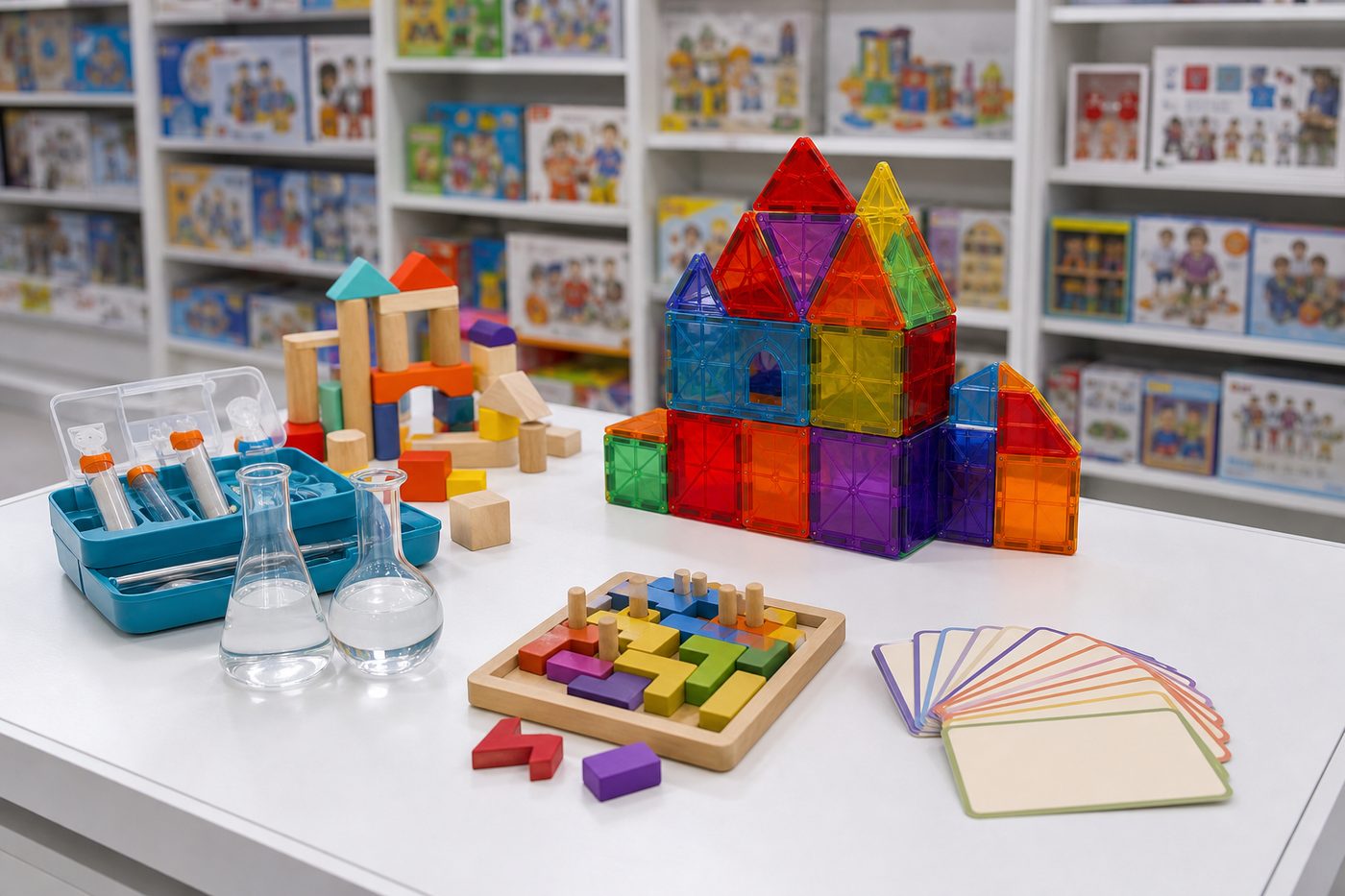
Yes, virtually any toy can be produced under your own brand, but the MOQ, tooling investment, and timeline depend on which manufacturing model you choose: OEM (your design), ODM (factory design with your branding), or stock plus logo. For a custom OEM plastic injection toy, expect tooling costs in the range of $3,500–$10,000 and an industry-standard MOQ around 3,000 units; for ODM on an existing mold, MOQ can drop to a few hundred or less, and lead times are much shorter. The sections below cover what you can customize, how tooling and sampling work, and the questions to ask before you commit.
Key Takeaways
- Choose OEM if you own the product design and accept higher upfront tooling costs ($3,500–$10,000 range for a typical steel mold) and a longer timeline (6–12 months total); choose ODM if you need speed and lower MOQ, often using the factory’s existing mold.
- Mold ownership is not implied by paying a sample or development fee—it is a contractual matter. Always define fee, ownership, storage period, and release conditions in writing before production begins.
- Sampling is a multi-stage process (prototype, pre-production, approval, shipping sample) and each stage has its own lead time—do not assume one total timeline covers tooling, sampling, testing, and mass production.
- Compliance testing (CPSIA/ASTM F963 for the US, EN 71/REACH for the EU) is your responsibility in OEM; budget for third-party lab testing and include it in your project schedule.
- In your first RFQ, ask for a breakdown of tooling, sample, unit, and packaging costs separately, and clarify the MOQ for each option—this prevents hidden fees and delays.
OEM vs. ODM vs. Stock + Logo
| Design source | OEM: Your complete design and IP; ODM: Factory’s existing design, customizable; Stock+Logo: Factory’s stock product, only logo/color changes |
|---|---|
| MOQ | OEM: Higher, often around 3,000 units (varies by factory); ODM: Lower, sometimes in the hundreds; Stock+Logo: Lowest, often just a few dozen |
| Tooling cost | OEM: $3,500–$10,000 for a steel mold (example range); ODM: $0–$500 if using existing mold; Stock+Logo: None |
| Lead time (sampling to shipment) | OEM: 6–12 months full cycle; ODM: 1–3 months; Stock+Logo: Depends on stock availability and logo printing, typically 2–4 weeks |
| IP ownership | OEM: You own the design and mold (if contractually agreed); ODM: Factory owns base design; you own branding; Stock+Logo: You own only the logo on the product |
| Best for | OEM: Brands needing unique product and long-term control; ODM: Testing new markets or limited capital; Stock+Logo: Quick private-label entry with minimal risk |
What Can You Customize?
In an OEM project, nearly everything can be customized: material, size, color, shape, function, packaging, logo, and labels. In ODM, customization is usually limited to surface changes like color, logo, and packaging—you cannot change the core structure without moving into an OEM-style project.
Material choices range from plastics (ABS, PP, PVC) to metal alloys for diecast models, plus fabric and stuffing for plush toys. Each material has different cost, safety, and durability implications, and some (like PVC) have restricted phthalate levels under regulations like CPSIA or REACH.
Packaging is a major customization lever. A simple polybag is the cheapest, but a display box, blister card, or window box can significantly increase perceived value. Packaging changes affect MOQ and unit price because they involve separate printing and assembly costs—ask for packaging quotes separately, not bundled with the product.
Safety-critical details like age grading, small parts, and warning labels must be specified by the buyer and validated during sampling. For example, a plush toy for under-3s requires 100% needle detection and different labeling than a collector item.
MOQ, Tooling & Mold Ownership
MOQ is not a single number; it is set per product category and per customization level. A plastic injection toy with custom tooling typically has a higher MOQ (often around 3,000 units) to amortize the mold cost, while a diecast metal model or a STEM kit may have different volume requirements due to the number of parts and assembly complexity.
Tooling cost is the biggest upfront expense in OEM. For plastic injection, a steel mold (P20 steel) can cost between $3,500 and $10,000, and aluminum molds are cheaper but wear faster—suitable for lower production volumes. The choice should match your expected production life: steel for long runs, aluminum for short runs or prototyping.
Mold ownership is a contractual matter, not a given. Even if you pay a tooling fee, you do not automatically own the mold unless the contract says so. Your RFQ and PO must specify: who pays for the mold, who owns it, where it is stored, for how long, and what happens if the tool sits idle. A verbal agreement is not enough—one factory noted: “Tooling policy is a document, not a handshake.”
ODM projects use the factory’s existing mold, so tooling cost is minimal ($0–$500) and MOQ can be lower, sometimes in the hundreds. However, you do not get exclusivity on the base design—other buyers can sell the same product under different brands.
Sampling & Lead Time
Sampling is not a single event but a series of gates: prototype sample, pre-production sample (after tooling), approval sample (the “golden sample”), and shipping sample (from the actual production batch). Each stage has its own lead time and cost.
A prototype sample (3D print or handmade) can be ready in 1–2 weeks and is used to check the design concept. Once tooling is cut—which can take around 42 days for a steel mold—the first shots (T1) are inspected, and you may need T2 corrections before the mold is approved.
Do not approve a product based on a photo. The physical “sealed sample” on the QC shelf is the reference for bulk production. As one quality team put it: “The argument that ends a colour fight is the sealed golden sample, not emails.”
Lead times must be broken down: tooling (e.g., 42 days for a steel mold), sampling iterations, compliance testing (2–4 weeks), mass production (45–60 days), and packaging. A total “lead time” hides the dependencies—ask for each stage separately, and note that peak season (pre-holiday) can add weeks for mold changes and production slots.
A typical OEM full cycle is 6–12 months from concept to shipment; ODM is faster at 1–3 months. For stock+logo, add 2–4 weeks for logo printing and packaging.
The OEM/ODM Process (Step by Step)
Running a custom toy project with any factory follows a standard workflow. The sequence below covers what to do and what to ask at each step.
1. Inquiry and RFQ: Send your design files (CAD, 2D drawings, 3D models) or a clear description of the product you want. Ask for a quotation that breaks down tooling cost, sample cost, unit price at different quantities, packaging cost, and MOQ. Request an NDA if you are sharing proprietary designs.
2. Feasibility and DFM review: The factory evaluates your design for manufacturability—draft angles, wall thickness, and material choices. They may suggest changes that reduce cost or improve quality. Ask for a written DFM report.
3. Prototype sample: Before committing to tooling, you can request a prototype (3D printed or handmade). Use it to check dimensions, look, and feel. Confirm what the prototype does and does not represent (e.g., color may be approximate).
4. Tooling and mold making: Once the prototype is approved, the factory cuts the mold. Lead time for a steel mold is around 42 days. During this phase, clarify mold ownership, storage, and maintenance terms in writing.
5. First articles (T1/T2) and approval sample: After tooling, the factory produces first shots. Inspect these against your spec, request changes if needed, and then approve a sealed sample. This physical sample becomes your quality benchmark.
6. Compliance testing: Run third-party lab tests for your target market (CPSIA/ASTM F963 for US, EN 71/REACH for EU). This can take 2–4 weeks. You are responsible for this in OEM—do not skip it.
7. Mass production: The factory schedules production and gives you a completion date. Ask for a production plan and check if any peak season factors might delay your slot. If you need a specific ship date, communicate it early.
8. Quality control and pre-shipment inspection: Before shipment, conduct a pre-shipment inspection (PSI) based on ISO 2859-1 sampling (typical AQL levels: Critical 0, Major 2.5, Minor 4.0). Hire a third-party inspector or request factory QC reports. Ask about 100% safety gates (e.g., needle detection for plush) and how failed lots are handled.
9. Shipping and documentation: Confirm the incoterm (FOB, CIF), shipping method, and required export documents. Ask for the shipping sample if you want to verify the final packaging and labels before the container is sealed.
Worked example (illustrative, not a real shipment): Suppose you are importing a custom plastic action figure to the US and UK. You approve a sample in February, tooling takes 42 days, production takes 45 days, and testing (ASTM F963 and EN 71) takes 3 weeks. That puts you at mid-May for production completion. If you add a 2-week pre-shipment inspection and 4-week ocean shipping, you land in late June—just in time for Q3. But if you change the packaging from a simple box to a blister card in September, you may miss the holiday season. The lesson: every change adds time, and packaging decisions should be locked early.
This example is illustrative to show how lead times stack; actual dates depend on the factory schedule and your decisions.
FAQ
What is the minimum order quantity (MOQ) for a custom toy?
For OEM with custom tooling, the industry-standard MOQ is often around 3,000 units, but some factories offer lower MOQs (e.g., 50 pieces) for simple products or ODM. For ODM using an existing mold, MOQ can be in the hundreds. Always ask for MOQ per product category and per customization level—it varies by factory and complexity.
How much does a mold cost, and who owns it?
A steel mold for a plastic injection toy can cost $3,500–$10,000, while aluminum molds are cheaper but less durable. Mold ownership is a contractual matter—you do not automatically own it unless the contract specifies ownership, storage, maintenance, and release conditions. Define these terms before paying any tooling fee.
How long does sampling take?
Sampling is multi-stage: a prototype may take 1–2 weeks, tooling around 42 days, first articles (T1/T2) a few days to a week, and compliance testing 2–4 weeks. Approval samples should be physical, not photo-based. The total sampling phase can take 2–3 months for OEM.
Can I put my own logo and packaging on an existing toy product?
Yes, that is the stock+logo or ODM route. You can customize the logo, colors, and packaging (e.g., display box, blister card) on an existing mold. MOQ is usually lower than OEM, and lead time is shorter—often 2–4 weeks for stock+logo, plus packaging time.
Will you sign an NDA before discussing my product idea?
Most reputable factories will sign an NDA to protect your design and IP. Always request one before sharing proprietary drawings or detailed specifications. In OEM, you typically own the design and mold, but only if the contract says so—do not rely on verbal promises.
What compliance testing do I need for US and EU markets?
For the US, toys must meet CPSIA and ASTM F963 standards. For the EU, EN 71 and REACH apply. Compliance testing is usually the buyer’s responsibility in OEM; budget for third-party lab testing and plan for 2–4 weeks of testing time in your project schedule.
Sources
Related Products & Categories
Send Your Design or Specs for a Custom Quote
If you have a product concept, a CAD file, or just a rough idea, send it to us for a detailed RFQ. We will respond with a breakdown of tooling, sampling, unit cost at different MOQs, and packaging options. We can also sign an NDA to protect your design. Email your specs to [[email protected]] or use the quote form on this page.