
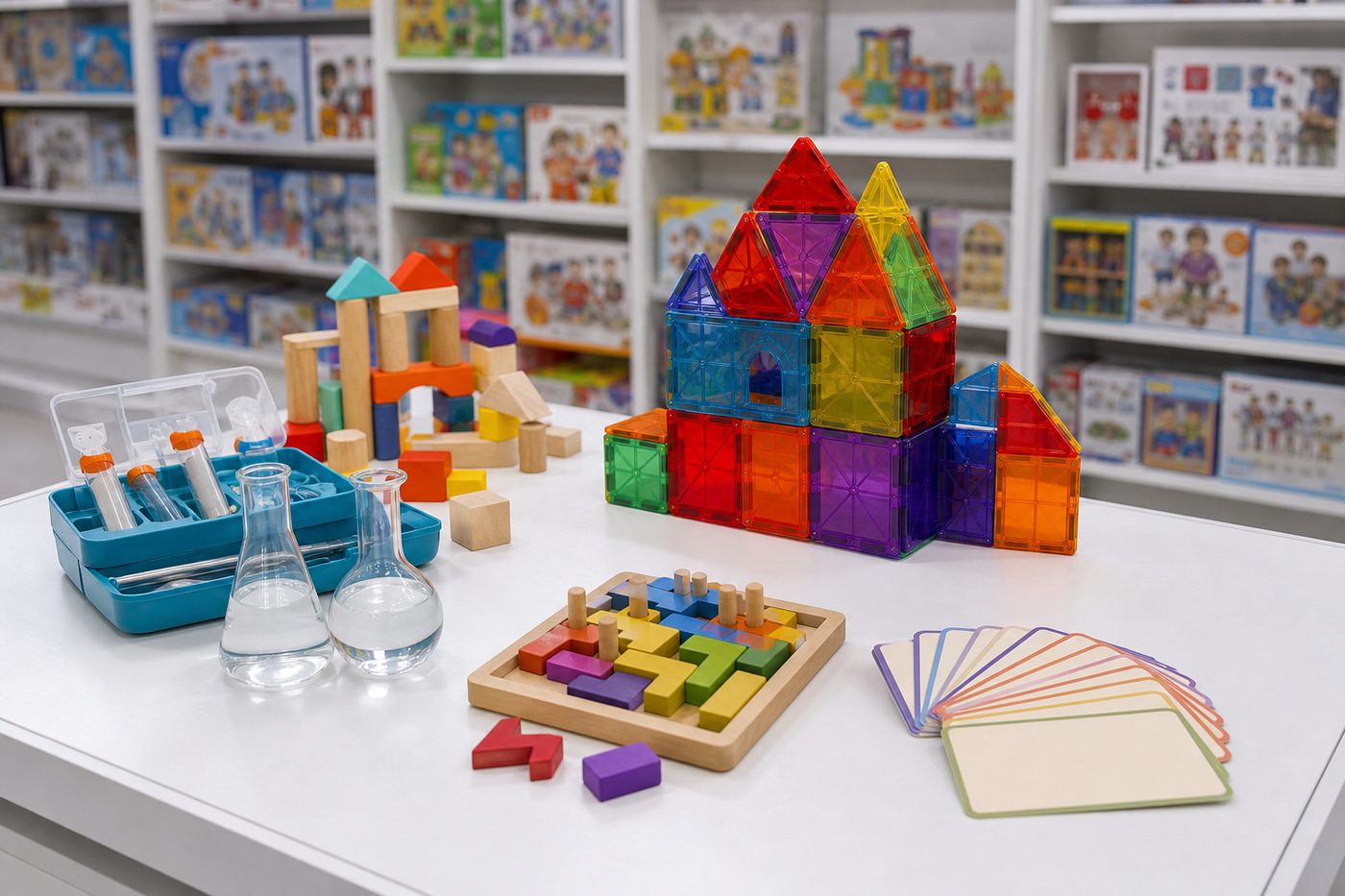
Peak-season assortment rechecks in 2026 are a margin exercise, not a merchandising one: buyers are cutting SKUs that cannot survive a tariff-rate swing, a freight re-quote, or a compliance document that does not match the exact SKU, and reallocating that open-to-buy to items with lower cube, verified test evidence, and year-round sell-through. The result is a smaller, better-documented assortment locked earlier — because the cost of adding a SKU late (air freight, expedited testing, new tooling) is no longer recoverable at the retail price points most wholesalers are working with.
Three pressures are forcing the recheck this season. First, tariff treatment for Chinese-origin toys is being described in supplier and trade coverage as an outcome range rather than a fixed rate, with US toy companies reportedly challenging the measures in 2026. Second, US compliance is tightening at the filing layer: importers of most regulated consumer products must electronically file certificates of compliance with US Customs and Border Protection through a Partner Government Agency Message Set beginning July 8, 2026. Third, the designs buyers are being pitched — weighted plush, recycled fabrics, long-pile animals — carry different fill, material and QC specs than the standard plush they replace, so unit cost moves even when the FOB quote looks flat.
What follows is the recheck we would run on any 2026 peak-season buy: which categories still clear a landed-cost test, which documents must exist per SKU before deposit, and how to time orders so a factory shutdown or a rate change does not land on your delivery window.
Key Takeaways
- Cut any SKU whose margin only works at one tariff rate. Ask for a three-scenario landed-cost model (baseline / escalation / exclusion) instead of a single quoted duty assumption, because 2026 tariff treatment for Chinese-origin toys is being reported as a range, not a settled number.
- Treat the Children's Product Certificate as a per-SKU gate, not a supplier credential. A CPC is product-specific and must cite each applicable CPSC children's product safety rule; a factory-level certificate does not cover a new SKU, a new age grade, or a changed material.
- Budget for the July 8, 2026 change: importers of most regulated consumer products must eFile certificates of compliance with CBP via a PGA Message Set, so your certificate data has to be complete and electronically submittable before the container sails, not after.
- Plush is where design upgrades raise cost. Weighted fill for sloth/whale-style stress-relief lines, recycled plush fabrics and eco-fillings for panda/sea-turtle positioning, and shedding-controlled long pile for Highland cow all change fill weight, hand-feel and unit cost versus standard plush — spec them before you commit peak-season quantities.
- Small-cube novelty formats protect margin better than bulky ones this year. Egg-box building sets, squishy assortments and compact collectibles carry less freight and storage cost per retail dollar than play tents or 3,000-bead jewelry kits, which need a full CBM and final-cost check before they earn shelf space.
Seasonal brand or trend matrix
| Tariff-rate uncertainty on Chinese-origin toys (reported 2026 range scenario) | Trend: suppliers are modelling 0%–25% outcome scenarios and pitching cost engineering (material substitution, sub-component localization, snap-fit assembly) rather than a fixed rate. Sourcing implication: require a three-scenario landed-cost sheet per SKU and keep an exit plan for any SKU that only clears the baseline. Dated source note: supplier trade coverage, Aug–Sep 2026; no primary customs or court source was supplied, so treat the rate range as unconfirmed. |
|---|---|
| Electronic filing of compliance certificates (eFiling via PGA Message Set) | Trend: importers of most regulated consumer products must eFile certificates of compliance with US Customs and Border Protection beginning July 8, 2026. Sourcing implication: collect the seven CPC elements in English and in a submittable format before booking production. Dated source note: CPSC Children's Product Certificate guidance page. |
| Wellness and comfort plush with weighted fill | Trend: capybara, sloth and whale lines are pitched with slightly weighted fill, relaxed poses and muted neutral palettes for teen and adult gifting. Sourcing implication: weighted fill changes fill weight and unit cost — lock the gram spec and confirm it is inside your age-grade and small-parts review. Dated source note: supplier plush trend list, 2026. |
| Eco-positioned plush (recycled fabrics, eco-fillings) | Trend: panda and sea-turtle styles are being positioned on recycled plush fabric and eco-fillings. Sourcing implication: request material documentation before locking quantities, and do not let packaging wording imply a certification the supplier has not evidenced. Dated source note: supplier plush trend list, 2026. |
| Long-pile plush with shedding risk | Trend: Highland cow-style shaggy long pile remains a visible design direction, with shedding flagged as the main risk. Sourcing implication: put an explicit shedding-control spec in the tech pack and add a pre-shipment check; a shed-heavy lot generates returns that no FOB saving covers. Dated source note: supplier plush trend list, 2026. |
| Year-round classic plush versus holiday-locked novelty | Trend: bunny and similar styles are being repositioned as year-round comfort plush with no holiday elements; holiday-specific novelty sets stay seasonal. Sourcing implication: split the buy — core neutral SKUs can carry deeper inventory, holiday-locked SKUs should stay shallow and early. Dated source note: supplier plush trend list, 2026. |
| Pre-shipment needle and metal detection for stuffed toys | Trend: factories are showing needle-detection as a pre-packing step for stuffed toys. Sourcing implication: write metal/needle detection into the inspection plan for every plush lot rather than accepting it as a default. Dated source note: factory process video, Aug 2026. |
| Small-cube novelty formats versus bulky sets | Trend: compact novelty formats (egg-box building sets, squishy food assortments, snap-build sets) are being pushed for wholesale, alongside bulky items such as cardboard play tents. Sourcing implication: compute CBM and final cost per retail dollar before listing; low-cube items absorb freight swings, bulky items do not. Dated source note: supplier novelty list, 2026. |
| CPC completeness as a customs-review risk | Trend: the CPC must identify the product specifically enough to match only the covered products, cite each applicable rule, and name the CPSC-accepted laboratory. Sourcing implication: a mismatched certificate is a customs and recall exposure, not a paperwork delay. Dated source note: CPSC Children's Product Certificate guidance page. |
Which categories still clear a landed-cost test in 2026?
Low-cube, high-margin-density items clear it; bulky, battery-heavy and holiday-locked items usually do not. That is the blunt version of the recheck. When the duty assumption is a range and freight is re-quoted at booking, the SKUs that survive are the ones where freight is a small share of the retail price — compact collectibles, small plush, egg-box building sets, squishy assortments, snap-build sets.
Walk the arithmetic per SKU rather than per category. A 118-piece snap-build set and a 3,000-bead jewelry kit can sit at similar FOB, but the jewelry kit's pack size, storage and pick cost per unit are materially higher, so its contribution margin is thinner at the same retail. A cardboard play tent is worse: it is the item most exposed to a volumetric-weight re-quote, because you pay for space, not weight.
Battery-powered novelty — bubble cars, rotating light-and-sound clocks — adds a second cost layer: the electronic module, charging protection and the electrical-toy safety testing that has to be scoped before the lab is booked. If your retail price point cannot absorb module cost plus a higher freight bill, the SKU belongs in the cut pile, however good the demo video looks.
The plush side needs the same discipline in a different place. Standard plush is a freight-efficient category; upgraded plush is not automatically. Weighted fill raises unit weight, recycled plush fabrics and eco-fillings can raise material cost, and controlled long pile adds a spec you have to police in production. Those are all defensible upgrades — but only if you priced them in before the peak-season quantity was fixed.
What compliance evidence must exist per SKU before you pay a deposit?
Before deposit, you should hold a Children's Product Certificate that matches the exact product configuration, age grade and material — not a factory-level certificate, and not a certificate for a sibling SKU. According to CPSC guidance, a CPC is product-specific and should never be described as a blanket factory certificate. It must cite each applicable CPSC children's product safety rule, identify the domestic manufacturer or importer certifying compliance, give contact information for the person maintaining test records, state the date and place of manufacture (at minimum month and year, and city/administrative region, state if applicable, country of assembly), state the date and place of testing, and identify the third-party, CPSC-accepted laboratory.
Two details trip buyers up. The CPC and its supporting test reports must be in English. And for date of manufacture, month and year is the minimum — if the same manufacturer runs more than one location in the same city, the street address of the factory is required. Where a supplier claims an exemption or determination instead of third-party testing, the CPC must still cite the applicable safety rule and identify the exemption or determination rather than naming a laboratory.
The test report itself has to line up on three axes: product configuration, age grade, and standard edition. For US-bound toys, the applicable edition of the toy safety standard should be read from the current regulation before any report is quoted, and a report should identify the configuration, age grade and edition it covers. For EU-bound toys, the essential safety requirements of the Toy Safety Directive 2009/48/EC apply, and CE marking plus an EU Declaration of Conformity belong to the conformity process and must be matched to the actual product scope. The General Product Safety Regulation (EU) 2023/988 is a separate legal instrument from the Toy Safety Directive, so do not let a supplier fold the two into one line of paperwork.
None of this says a specific factory or SKU is certified. It says the evidence must be tied to the SKU, the report, the responsible party and the current version. Confirm the current consolidated text and the product scope for your market before you publish or accept any compliance statement.
How does the July 8, 2026 eFiling change your document timeline?
It moves certificate collection from a post-arrival paperwork task to a pre-shipment gate. Beginning July 8, 2026, importers of most regulated consumer products must electronically file certificates of compliance with US Customs and Border Protection via a Partner Government Agency Message Set. If your supplier's certificate data arrives as a PDF photographed from a binder two days before the vessel sails, you have a problem.
Build the timeline backwards. Certificate data complete and checked against the SKU → eFiling submission → booking and sailing → arrival. Each of those steps needs buffer, and the buffer has to sit before the filing, not after. The practical ask to suppliers is simple: send the seven CPC elements in English, machine-readable, with the third-party laboratory's identification, at the same time as the production schedule — not with the shipping documents.
Age grading and small-parts review belong on this same checklist. According to CPSC small-parts guidance, age grading and small-part risk are connected and must be assessed for the actual product configuration, and assemblies, detachable accessories and packaging components need the same review discipline as the main toy. A plush with a detachable clip, a playset with small accessories, or a novelty set with loose beads are all configurations where the age grade and the small-parts assessment have to match what is actually in the box.
Why is plush the category most likely to change your cost per unit?
Because the 2026 design direction for plush adds fill, material and process specs that standard plush does not carry. Supplier trend material for this season groups the demand drivers as emotional comfort, internet culture, sustainability awareness and lifestyle aesthetics rather than classic characters or age brackets — and each driver maps to a physical spec change.
Wellness-positioned animals — capybara, sloth, whale — are pitched with slightly weighted fill for a grounding feel, relaxed or lying poses, and calm muted neutrals aimed at teen and adult gifting. Weighted fill changes the gram spec, and the gram spec changes unit cost. It also has to sit inside your age-grade and small-parts review, because a heavier plush behaves differently in a drop or seam test than the standard version of the same pattern.
Eco-positioned items — panda, sea turtle — call for recycled plush fabrics and eco-fillings. Ask for material documentation before you lock peak-season quantities, and keep packaging wording conservative: the source describes materials, not certifications, and packaging claims you cannot evidence are a compliance problem in both the US and EU.
Highland cow-style long pile carries the biggest hidden risk. The shaggy look depends on long-pile fabric, and shedding control is the critical spec. Put a shedding-control requirement in the tech pack and add a pre-shipment check — fibre shedding drives returns and one-star reviews in a way that a few cents of FOB saving never offsets. Add metal/needle detection to the inspection plan for every plush lot; factories are showing it as a pre-packing step, which means it is available, not that it is automatic.
Separate the core from the trend. Bunny, penguin, bear and duck styles are being repositioned as year-round comfort plush with no holiday elements, in neutral cream, beige and soft grey. Those can carry deeper inventory because they sell outside December. Trend and drop-style SKUs — collectible frogs, compact axolotl sizes — should run on smaller, faster replenishment rather than one big pre-season buy, because their markdown risk is concentrated in a single season.
How should MOQ and timing shape a recheck that starts in September?
September is late for a full new-tooling program and fine for reorders, colour and packaging changes, and assortment swaps inside existing tooling. That distinction should drive the entire recheck: anything needing new moulds, new electronics or a new lab scope is a next-cycle item, not a peak-season item.
On MOQ, negotiate in the units you can actually sell through, not the units that get you the best FOB. Multi-design sets help here — a 12-model egg-box building set or a 16-piece dinosaur set with storage box lets you cover several designs under one purchase order and one listing. The trade-off is that a wider design range inside one SKU usually means a higher per-design minimum commitment or a shared tooling cost, so confirm how the factory allocates the MOQ across designs before you sign.
For customization, simple changes — colours, logo, packaging artwork — move faster than new shapes or new electronics. Confirm method, cost and lead time early, and expect the lead time for a new design to be measured in weeks beyond a colour change, not days. Sampling first remains the cheapest insurance in the whole process.
Timing is where most peak-season margin is lost. Confirm the peak-season and holiday shutdown dates for your specific factory and year rather than copying a generic toy-industry calendar — shutdown dates are factory- and year-specific, and a shutdown that lands inside your production window converts a sea-freight plan into an air-freight bill. Work backwards from your in-store date, not forwards from the order date.
One more check on cost: verify the freight basis before you compare quotes. Actual weight versus volumetric weight changes the answer completely for bulky items, and duties, clearance and hidden import costs belong in the landed-cost sheet, not in a separate line item discovered at arrival.
OEM-relevant examples
If the recheck concludes that you need a small-cube novelty or plush program with documented compliance and flexible minimums, that is the kind of brief worth putting in front of a factory early rather than in October. Chenghai-Toys works with buyers at exactly this stage of the cycle: scoping the market and test plan before the laboratory is booked, confirming peak-season shutdown dates for the specific factory and year, and giving design-for-manufacturability feedback before tool cutting so draft, wall, gate, undercut and ejection risks are caught while changes are still cheap.
Two things are worth agreeing in writing before any deposit: the major and minor defect limits for each lot or inspection plan, since a factory's default percentages are not automatically your acceptance criteria, and the fill, material and shedding specs for any plush program. Bring your target retail price and we will tell you honestly which SKUs in your list can carry a tariff swing and which ones cannot.
FAQ
Is toy demand actually growing going into the 2026 peak season, or should I buy shallower?
The direction is up but the mix is shifting, so buy deeper on year-round core SKUs and shallower on holiday-locked novelty. Trade coverage in August 2026 reported global toy sales rising in the first half of 2026 across tracked markets and noted that category preferences, licensing, seasonality and fandom vary by region — which means a category that is growing globally can still be flat in your market. Buy shallow where the SKU only sells in one holiday window; buy deeper where the SKU sells year-round.
What should I ask a supplier for instead of a single quoted tariff rate?
Ask for a three-scenario landed-cost model: baseline duty, escalation, and an exclusion or exemption case. Suppliers covering 2026 tariffs are themselves describing the outcome as a range rather than a fixed rate, and some are pitching cost engineering — material substitution, sub-component localization, fewer screws through snap-fit assembly — as the response. A single quoted rate hides that risk in your margin. Require the scenario sheet per SKU, and decide in advance which SKUs you drop if the escalation case is the one that lands.
What exactly must a Children's Product Certificate contain before I pay a deposit?
Seven elements, per CPSC guidance: product identification; citation to each applicable CPSC children's product safety rule; identification of the domestic manufacturer or importer certifying compliance; contact information for the person maintaining test records; date and place of manufacture; date and place of testing; and identification of the third-party, CPSC-accepted laboratory. The CPC and supporting test reports must be in English, and the certificate must match the specific product — it is not a blanket factory certificate. No specific template is required, but all seven elements must be present and accurate.
Does the July 8, 2026 eFiling rule apply to my toy imports?
If you import most regulated consumer products, yes — importers must electronically file certificates of compliance with US Customs and Border Protection via a Partner Government Agency Message Set beginning July 8, 2026. Confirm your specific product scope, because the requirement covers most regulated consumer products rather than every shipment. Practically, this means your supplier has to deliver complete certificate data in a submittable format before the container sails, not alongside the arrival documents.
Are weighted and recycled plush worth the extra unit cost?
Yes for wellness and gift-channel positioning, no if you are selling into a price-driven mass channel. Weighted fill for sloth, whale and capybara styles supports teen and adult gifting and stress-relief positioning, which tolerates a higher retail price. Recycled plush fabrics and eco-fillings support an eco story but require material documentation before you commit peak-season quantities, and packaging wording should not imply a certification the supplier has not evidenced. If your channel competes on opening price point, standard plush in neutral year-round colourways is the better buy.
When is the latest I can place a peak-season order without paying for air freight?
There is no universal cut-off — confirm the peak-season and holiday shutdown dates for your specific factory and year rather than copying a generic industry calendar. That said, a September recheck should focus on reorders, colour and packaging changes, and assortment swaps inside existing tooling; anything requiring new moulds, new electronics or a new lab scope is realistically next-cycle. Build the timeline backwards from your in-store date and include the certificate and eFiling steps as gates before booking, not after.
Sources
- 2026 Cross-Border Toy Sourcing Strategy Guide: Plan Around Global Holidays & Sports Events
- Best-Selling Toy Categories for Wholesale in 2026
- Early birds get a jump on holiday shopping — and this year’s hottest toys
- Global Toy Sales Surge 14% in First Half of 2026, Circana Reports
Request a Quote
Send us your 2026 peak-season line list with target retail prices and destination market, and we will come back with a per-SKU landed-cost view, the compliance evidence required for each item, and an honest read on which SKUs should be cut before you commit open-to-buy. Bring the plush specs too — fill weight, fabric and shedding requirements — and we will flag what has to be fixed in the tech pack before sampling.