
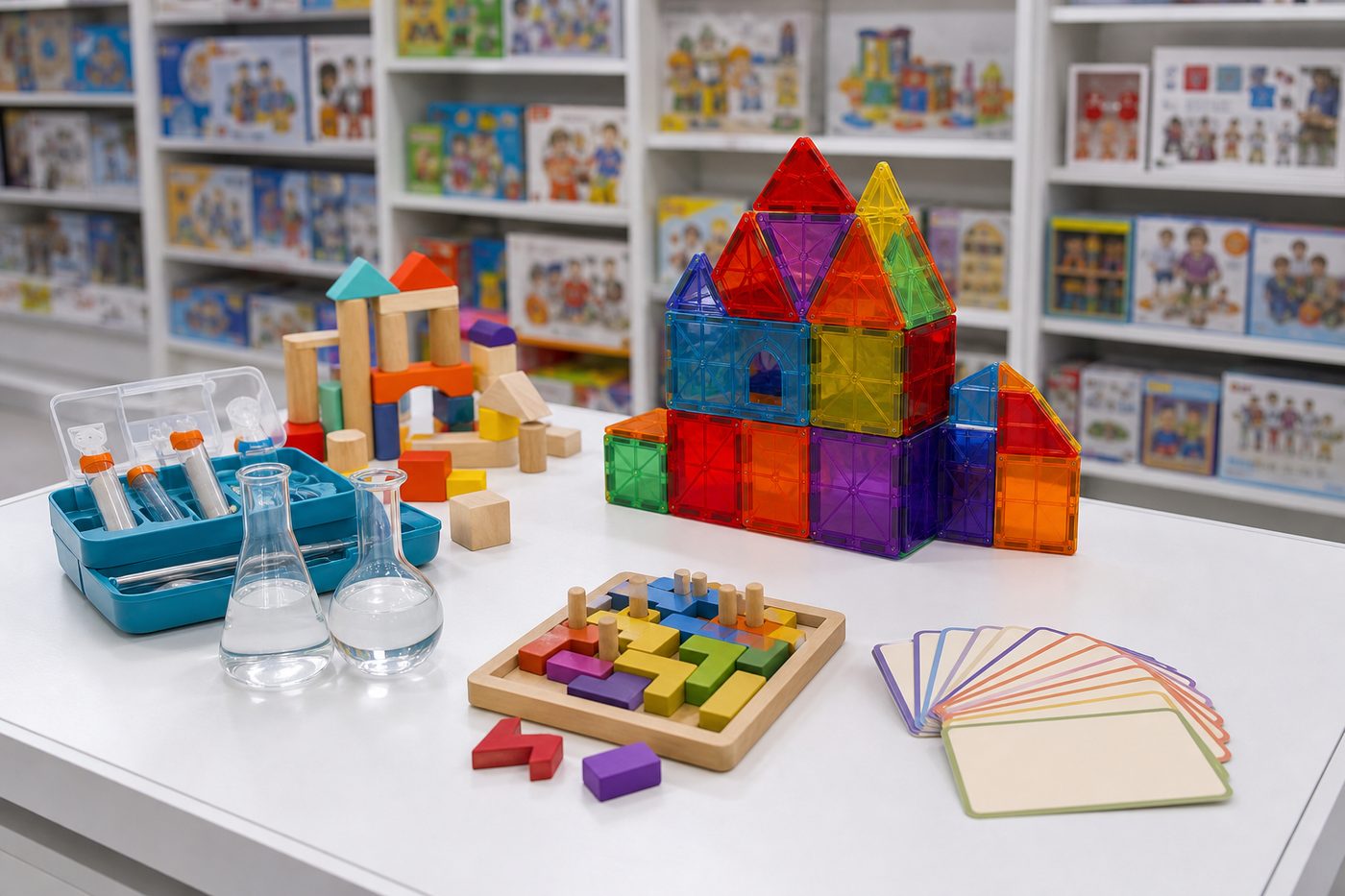
ASTM F963-23 is the mandatory safety standard for any toy manufactured on or after April 20, 2024, and sold in the US market in 2026. The Consumer Product Safety Commission (CPSC) enforces this under 16 CFR Part 1250, and the version that applies to your product depends on its manufacture date—not the date you place the order or the date the shipment clears customs. As a buyer, your job is to verify that the supplier's production batch meets this edition, backed by a Children's Product Certificate (CPC) from a CPSC-accepted lab.
Why the Manufacture Date Determines Which ASTM F963 Edition Applies
The CPSC identifies the mandatory version of ASTM F963 in 16 CFR §1250.2, and that version is tied to when the toy was manufactured. For toys produced after April 20, 2024, ASTM F963-23 is the required edition. The previous edition, ASTM F963-17, may still apply to toys made before that date—but only if the supplier can prove the manufacture date. This is why you should never assume a current order automatically complies with the latest standard; the date on the box or the production lot matters.
If your supplier ships old stock manufactured in early 2024, that product might not meet the updated requirements in F963-23, such as stricter battery accessibility rules or revised acoustics limits. A customs broker or retailer checking compliance will look at the manufacture date and the CPC. If the date is after April 20, 2024, and the CPC references the old edition, you have a problem.
What ASTM F963-23 Actually Covers
ASTM F963-23 is the Standard Consumer Safety Specification for Toy Safety, covering toys intended for children under 14. But the mandatory testing and certification under CPSC rules only apply to toys designed primarily for children 12 and under. For toys aimed at 13- and 14-year-olds, you may still need to meet the standard, but you do not need third-party testing or a CPC.
The standard covers mechanical hazards (sharp edges, points, small parts), chemical hazards (lead, heavy metals, phthalates), flammability, magnets, sound-producing toys, and battery accessibility. Not every section applies to every product. The flammability section (4.2) is not a mandatory requirement under 16 CFR 1250.2(b) because it restates other federal rules; instead, toys must not be extremely flammable solids under the Federal Hazardous Substances Act. Similarly, the cosmetics section (4.3.4) is not mandatory because the FDA regulates cosmetics. Your supplier must identify which sections apply to your specific toy.
The 2023 revision brought notable updates: battery compartments must now be secure with captive screws or specialty fasteners for toys up to age 14; sound-producing toys for ages 8–14 have new acoustics testing categories; phthalates testing follows CPSC method CPSC-CH-C001-09.4; and expanding materials (like water-absorbing balls) are covered even if encased or re-expandable.
What Buyers Must Verify When Sourcing
When you receive a quote or a sample, do not just ask for 'ASTM F963 compliance.' That phrase is too vague. Use this practical checklist in your sourcing conversations.
First, confirm the manufacture date. Ask the supplier for the production date of the specific lot you are buying. If the toy is manufactured after April 20, 2024, it must meet F963-23. If the supplier cannot provide a manufacture date, that is a red flag.
Second, request a copy of the Children's Product Certificate (CPC). The CPC must identify the specific CPSC rules or standards that apply—not just state that the toy is safe. It must be issued by the domestic manufacturer or importer, and it must reference the correct legal citations, such as 16 CFR Part 1250 and 16 CFR Part 1303 for lead in paint.
Third, verify that the third-party testing was done at a CPSC-accepted laboratory. Testing can be performed anywhere in the world, but only labs accepted by the CPSC count. Ask for the lab's name and its CPSC accreditation scope. Not all accepted labs cover every section of F963-23.
Fourth, check that the test report matches the production lot. A test report is valid only for the specific production lot it covers. If the supplier changes materials, design, or moves to a new factory, they need new testing and a new CPC.
Finally, note that ASTM F963-23 is not the only requirement. Additional federal rules apply: small parts ban for children under 3, lead in paint (90 ppm), total lead content (100 ppm), phthalates (0.1%), and tracking labels per CPSA Section 14(a)(5). These supersede any conflicting ASTM F963 sections.
Key ASTM F963-23 Requirements at a Glance
| Mandatory version for toys manufactured after April 20, 2024 | ASTM F963-23, enforced by CPSC under 16 CFR Part 1250 |
|---|---|
| Scope | Toys for children under 14; testing/certification for those 12 and under |
| Third-party testing | Required only for specific sections listed in 16 CFR §1112.15(b)(32), e.g., 4.3.5.1 (paint), 4.3.5.2 (substrate), 4.5, 4.6, 4.25 |
| Certification | CPC required for all applicable sections, even those exempt from third-party testing |
| Additional federal rules | Small parts, lead in paint ≤90 ppm, total lead ≤100 ppm, phthalates ≤0.1%, tracking labels |
| Flammability | ASTM F963 section 4.2 is not mandatory under 16 CFR 1250.2(b); FHSA flammability rules may apply |
How to Verify a Supplier's CPC Is Credible
A CPC is a certificate of compliance, not a test report. It is a legal document that the manufacturer or importer issues, declaring that the product meets all applicable CPSC rules. The CPC must list the specific standards and rules, the date and place of manufacture, the testing lab, and the date of testing. If a supplier sends you a one-page document that says 'Passed ASTM F963' without those details, treat it as incomplete.
Cross-check the CPC against the test report. The test report should come from a CPSC-accepted lab and should cover the specific sections that apply to your product. For example, if your toy is a stuffed animal, you need testing for small parts, but not for battery accessibility. The report should show the lab's name, the test methods, and the results. You can check a lab's acceptance status on the CPSC website.
The CPC is the importer's responsibility. If you are importing the toy, you are the one issuing the CPC—even if you rely on the supplier's test data. That means you need to be confident the data is accurate and covers the correct standard. A common mistake is to accept a test report for F963-17 when you need F963-23. Always confirm the edition.
ASTM F963-23 vs. EN 71 for EU Market
| Standard | ASTM F963-23 (US) vs. EN 71 (EU) |
|---|---|
| Region | United States (CPSC) vs. European Union (European Commission) |
| What it covers | Both cover mechanical, chemical, and flammability hazards for toys, but specifics differ (e.g., limits, test methods, age ranges) |
| Proof document | Children's Product Certificate (CPC) vs. EU Declaration of Conformity (DoC) |
| Key difference | US uses a mandatory standard incorporated into law; EU uses a harmonized standard under the Toy Safety Directive (2009/48/EC) |
Key Takeaways
- Buyers must check manufacture date: Toys made after April 20, 2024 must meet ASTM F963-23; older editions may not be accepted for new shipments.
- CPC is not optional: For toys for children 12 and under, a CPC from the manufacturer/importer is required, even if third-party testing is only needed for certain sections.
- Testing must be at a CPSC-accepted lab: Third-party tests must be performed at a lab accepted by CPSC; verify the lab's accreditation scope.
- F963-23 updates matter: Battery accessibility, expanding materials, acoustics, phthalates, and tracking labels are key changes; ensure your supplier's testing covers them.
- Additional federal rules still apply: Lead, phthalates, small parts, and tracking labels are separate requirements that supersede ASTM F963 sections.
FAQ
If my supplier says the toy is 'ASTM F963 compliant', is that enough?
No. ASTM F963 has editions; you need confirmation that the toy is manufactured after April 20, 2024, and meets F963-23. Ask for the CPC and test report to verify.
My order is for toys made in 2025. Does ASTM F963-23 apply?
Yes. Any toy manufactured after April 20, 2024 must comply with ASTM F963-23. The manufacture date is the trigger, not your order date.
What if my toy is for children aged 13-14? Do I need a CPC?
No. ASTM F963-23 applies to toys for children under 14, but third-party testing and a CPC are only required for toys intended primarily for children 12 and under. For older children, you still need to meet the standard but not the certification.
Can I use a test report from a lab outside the US?
Yes, as long as the lab is CPSC-accepted. The CPSC accepts labs globally, but you must verify the lab's acceptance scope covers ASTM F963-23.
What should I do if my supplier's CPC only mentions 'ASTM F963' without a year?
Request a new CPC. The certificate must identify the specific standard edition and other applicable CPSC rules. A CPC that only says 'ASTM F963' is insufficient; it must reference ASTM F963-23 and include the legal citations.
Does ASTM F963-23 cover battery-operated toys?
Yes. The 2023 revision strengthened battery accessibility requirements for toys up to age 14. Batteries that fit in the small-parts cylinder must not be accessible without a common household tool, and battery compartment fasteners must remain attached.
Sources
Request a Quote
Ready to source toys that meet ASTM F963-23? Contact our team to discuss your product specifications and get a compliance checklist tailored to your market.